


The distinction between the American nation, country, and government matters because the typical lifespan of great empires is roughly 250 years. The probability that the current American government and country will end in their present form is rising, yet the American nation—the body of ethnic Americans—will continue, as it has for more than 400 years, and will form a new country and government.
Definitions:
Nation = ethnic group
Country = geographic political entity
Government = institution and system
A nation concerns people and identity, a country concerns territory and sovereignty, and a government concerns the institutions that exercise authority.
Applying these terms to America:
American nation: the English-speaking, primarily Protestant people of Northwestern European descent who founded and built the settlements from Jamestown (1607) and Plymouth (1620) through approximately the 1870s, together with their descendants.
American country: the sovereign political entity comprising the 50 states and associated territories.
American government: the federal constitutional republic of the United States of America, with its three branches, together with state and local governments.
Members of the American nation are ethnic Americans. All ethnic Americans are U.S. citizens, but not all U.S. citizens are ethnic Americans. Non-citizens are neither members of the American country nor members of the American nation.
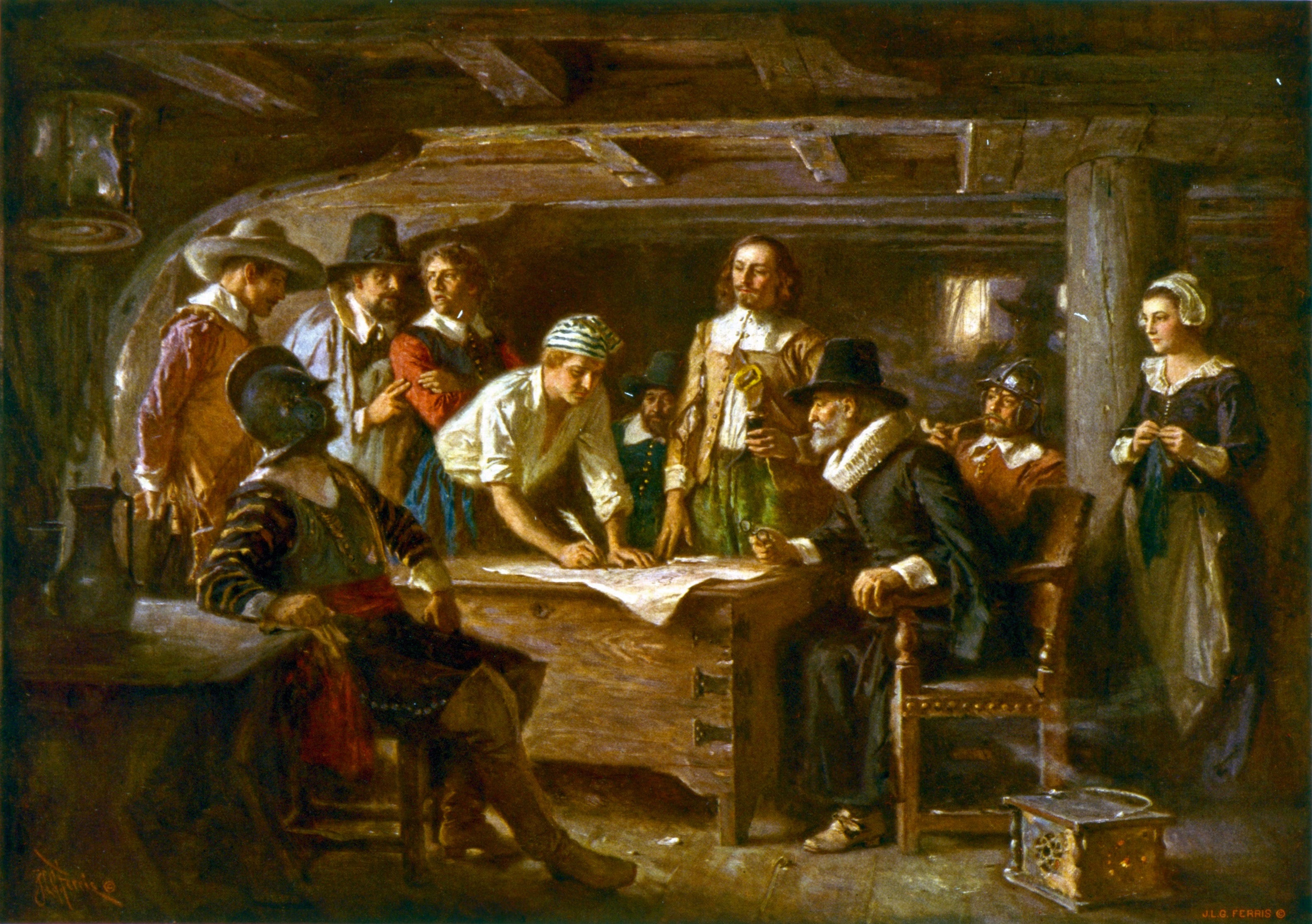
I have two direct ancestors who participated in the founding of the American nation on 21 November 1620, when they and 39 other passengers of the Mayflower signed the Mayflower Compact while anchored in Provincetown Harbor. Historians often regard the Compact as an early step toward American self-government; some have described it as the first written constitution.

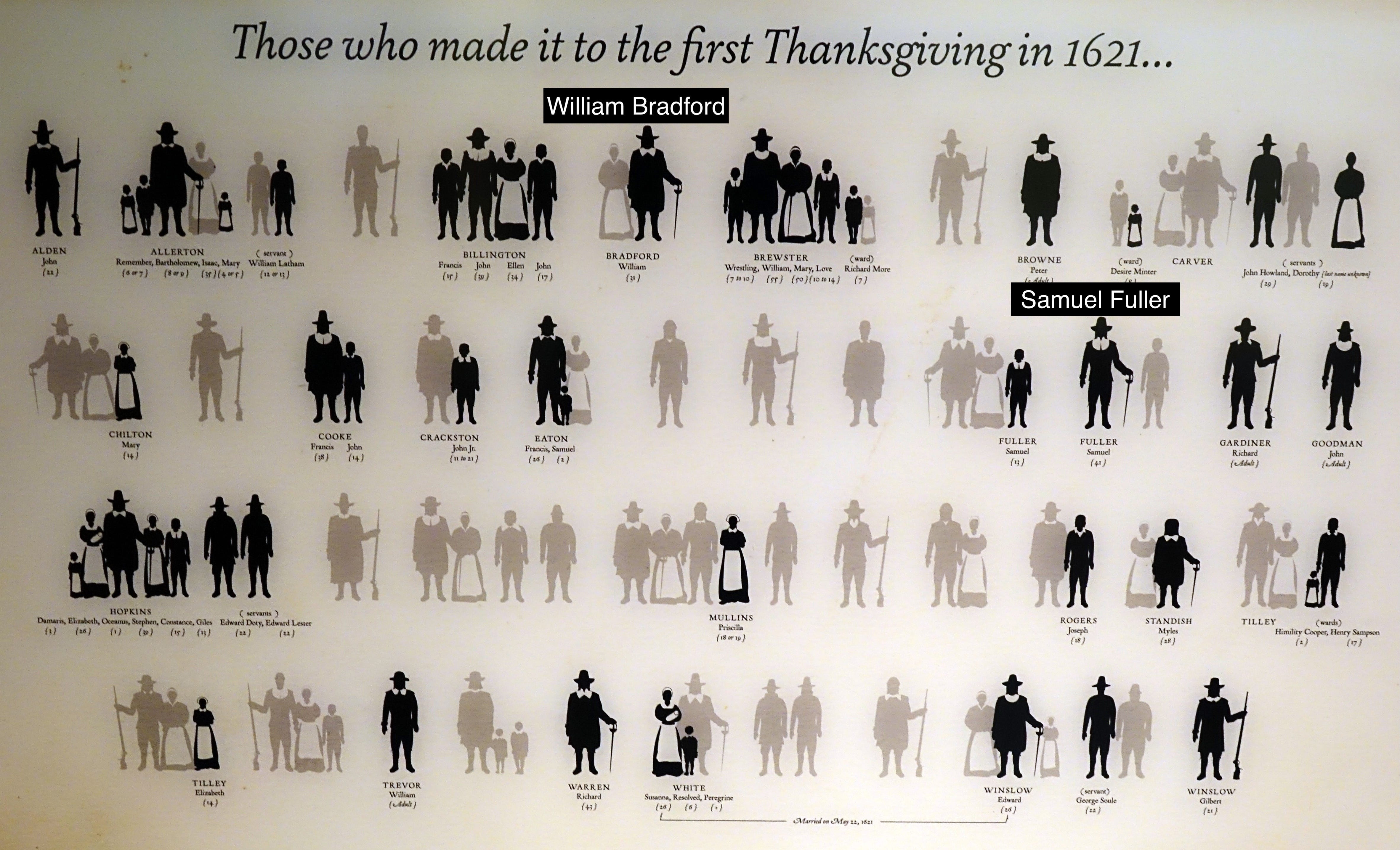
These founders held the first Thanksgiving the following autumn. The accompanying image identifies my two ancestors, William Bradford and Samuel Fuller.
The present government—the second American republic—was established by the Constitution, ratified in 1788, 168 years after the 1620 founding. The first republic was established by the Articles of Confederation, ratified in 1781. Between 1620 and 1781 the English-speaking settlers created more than twenty major colonial governments, falling into three principal types: royal, proprietary, and charter colonies. By the Revolution, thirteen of these governments remained and became the organizational basis for the states that later formed the Articles of Confederation.
In summary, the American nation was founded in the early seventeenth century (Jamestown 1607 or Plymouth 1620), not in 1776. The Declaration of Independence was a statement of intent to form a new government for an already existing nation.
In 1861, Americans in eleven states formed the Confederate States of America, a new republic that ended with military defeat in 1865. Some scholars argue that the Reconstruction amendments and associated legislation effectively constituted yet another republic.
To recap:
The American nation and its first formal government (the Mayflower Compact) were established 405 years ago.
Ethnic Americans have created more than twenty governments—compacts, colonies, and republics—in the course of 405 years.
They have formed at least two republics (1781 and 1788) and possibly two more (the Confederacy and the Reconstruction order).
4 July 1776 was a declaration that preceded the formation of a new government; it was not the founding of the nation.
Why does it matter that America Was Founded in 1607 Not 1776?
The distinction between nation, country, and government matters because the United States, and the world, is approaching a confluence of advanced technology, space colonization, ethnic and religious conflict, and both natural and man-made catastrophes. These developments are likely to end the present American country and government. The American nation—the collective body of ethnic Americans—must therefore prepare to form the country and government that will serve it in the coming millennium.
Now go start preparing for Thanksgiving–the true American holiday.